Showing posts with label Charming Place to Visit in China. Show all posts
Showing posts with label Charming Place to Visit in China. Show all posts
Thursday, August 29, 2013
Have a Tour Hangzhou in China Follow Me
Hangzhou, a city famous for its scenic splendor, attracts more than 20 million tourists from home and abroad every year. Its unique environment endowed by nature and those who have lived here, is an accumulation of several thousand years that has formed many world renowned natural, historical and cultural features.
Whenever talking about this city, the famous West Lake can never be far from one's thoughts. Held on three sides in the embrace of hilly peaks, this water wonderland has been an attraction for centuries and it is small wonder that it was a favorite imperial retreat. The lake and its environs have all the elements of a traditional Chinese garden but on a grand scale. The natural setting of strangely shaped peaks, serene forests and springs, dense foliage and a myriad of blossoms especially in springtime are enhanced by a treasury of sculpture and architectural features. The largest part of West Lake is known as the Outer Lake and it is bounded by the North Inner Lake, Yuehu Lake, West Inner Lake and Lesser South Lake.
The Solitary Hill lies between the Outer Lake and the North Inner Lake and is an ideal spot from which to admire the vista. For those who have a love of sculpture and art and those who have a particular interest in Buddhism the Peak Flown From Afar and the Temple of the Soul's Retreat are the must see attractions. The nearby Mausoleum of General Yue Fei is a monument to the patriot who was murdered in 1141 at the behest of his archrival Qin Hui, the Song prime minister. These buildings together with others in the vicinity of the lake such as the slender 13 storey high Six Harmonies Pagoda adds to the calm and beauty of their surroundings.
Gorgeous Cruise boats on West Lake
Temple of Soul's Retreat
This beautiful city is always ready to offer visitors more to see. If you have more time to travel in the city and want to see other places of wonderful landscape, you can visit the following scenic spots. Botanical Garden is both a park embracing beautiful plants and a research base to study botany. Running Tiger Spring is famed for its unique fountain of high water quality. Mt. Putuoshan Scenic Spot is held sacred by Buddhists and it was here that over the centuries a once large Buddhist community was to evolve. Red Carp Pond is the heart of Viewing Fish at Flower Harbor Park (Huagang Guanyu), one of the ten places of interests at West Lake. Thousand Islets Lake (Qian Dao Lake) is a pure lake with fresh and clean air. Twin Peaks Piercing the Clouds is a unique sight in foggy days.
No visitor to the West Lake and the city can fail to learn something of this city's most famous products, namely silk and Longjing (Dragon Well) Tea. China National Silk Museum is the country's first national museum to be dedicated to silk culture and is the largest of its kind in the world. A similar museum is dedicated in homage to tea. Located at the West Lake Dragon Well Tea Plantation, the National Tea Museum provides a fascinating insight into the history and production of tea. Additionally visitors can go to other museums. Museum of Traditional Chinese Medicine is the only state-level professional Chinese medicine museum in the country. Southern Song Dynasty Official Kiln Museum has been praised as the Civilized Museum of Zhejiang Province and the first group of provincial education base of patriotism.
Water Town
Qinghefang Ancient Street
Another natural spectacle to be found in the city is the Qiantang River Tide that has enthralled people for centuries. Annually, millions of people from both home and abroad flock there to watch the magnificent tide on the eighteenth day of the eighth lunar month (also around the mid-Autumn Day). When the surging tide comes, the water can rise up to a height of 30 feet and the noise it generates sounds like thunder, or thousands of galloping horses.
The other great feat of much earlier engineering is the Grand Canal. Linking the city in the south with Beijing in the north, this is the longest man-made waterway in China and surpasses both the Suez and Panama canals. Boating on the old Canal is one of the best ways to get a panoramic view of the landscape of typical river towns in southern region of the country, which include ancient dwellings, stone bridges of traditional designs and historical relics.
Six Harmonies Pagoda
The Heavenly King
The Statue of Yue Fei
Around the city area, there are also some places worth visiting. For example, Wuzhen, ranking first among the six ancient towns south of the Yangtze River was authorized as the Provincial Ancient Town of History and Culture. Xitang is a famous town with thousands of years of history. Mogan Mountain has been listed as one of the 'Four Best Summer Resorts in China' along with Beidaihe Scenic Spot, Mt. Lushan and Jigong Mountain. Tiantai Mountain Scenic Area is known for its beautiful scenery and for being the cradle of the Tiantai Sect of Chinese Buddhism.

Wednesday, August 21, 2013
How About Have a Cherry Picking Tour in Beijing This Summer
This past Saturday morning I had the pleasure of attending Beijing’s Haidian District’s 19th annual Sijiqing Cherry Picking Festival. The event featured eleven different types of cherries native to the area in the city’s largest cherry orchard, a quiet place on the outskirts of Beijing. The morning kicked off with a short ceremony before opening up the orchard for all to branch out and pick their favorite cherries.
I recommend the event for anyone who hasn’t experienced it, especially anyone with children. The event coincides with International Children’s Day and provides a particular thrill for the kids with other events for them to partake in. Just be prepared for the Chinese equivalent of the paparazzi to scramble to get a photo of you assisting your exceptionally cute child in snagging a cherry.
The festival’s preceding ceremony included a speech by several district officials, followed by a gift exchange by a group of local children to symbolize harmony among children. Meanwhile, you could visit the display table to sample the variety of cherries which were being offered. I dropped by to investigate the assortment. While to the untrained eye some cherries appeared identical, the tastes were indeed distinctive. The cherries carry names such as the Red Lantern and the Early Red Jade and varied from a dark violet red, to scarlet, to pink, to yellow. And if you are not a connoisseur of cherries in the slightest, you can at least marvel in the aesthetically pleasing quality of cherries which all can agree upon. My personal trip to the test tasting table included an interview with the local news team which made my day complete even before the picking was

The cherries were abundant and the orchard was plenty big to spread out and not get crowded—such circumstances are hard to come by in Beijing. With selections for those who prefer sweet cherries or even those (like me) who prefer sour, the search for the tree with the perfect tasting cherries was on. While there were plenty of low hanging fruit for all the little tykes, some of the best clusters involved a little climbing or the use of a latter which made the event even more entertaining and introduced a teamwork aspect into the process.
It appeared that all had success filling their baskets with plenty of cherries but if you weren’t able to fill up your basket enough during the picking then there were also boxes of cherries for purchase following the festival. While the ceremony is held at the beginning of June, the weather at the orchard was surprisingly pleasant. The trees provided shade and the rhythmic breeze made it pleasurable. However, I would recommend bringing along a bottle of water to keep hydrated.
This short and sweet festival provides a splendid time for those looking to get involved in a bit of the cultural activity that Beijing offers. If you are in town this time of year, you should check it out. The atmosphere is pleasant, the people are cheerful, and the cherries are ripe.
Thursday, August 8, 2013
Chang'an Grand Theater
Built in 1937, Chang'an Grand Theater is located in Guanghua Changan Building, north on East Changan Street. As a modern theater with top quality, luxury and comfort, it perfectly embodies traditional styles, especially that of the Ming and Qing Dynasties and modern architectural art. Up to 800 people can be seated in this classic-oriented theater decorated with elegant red wood tables,

There are various types of seats to choose: the tea house in the front area, the rowed seats in the back area, and the VIP box, common box and rowed seats on the second floor. Photos of Beijing Opera masters and theatrical costumes for different roles are exhibited on the second floor of the lobby. There is calligraphy, facial makeup, painting and video sold on the first floor. The highlight of Chang'an Grand Theater is the customized operas designed for the better understanding by foreign tourists. Collaborating with performance bodies like Beijing Opera Company, Chang'an Grand Theater offers "travel opera" for foreigners, which consists of maximum amount of roles in Beijing Opera and is easy to understand. The ingenuity of playwrights and directors, together with sophisticated settings, stage props, lights and sound, embodies the essential spirit of conventional Beijing Opera, best exemplified by The Legend of the White Snake, which made its debut in 1997 and is highly appreciated by foreign audiences. Synchronous subtitles in both Chinese and English are provided so that the audience may know the plot better. The daily show of travel opera in Chang'an Grand Theater has been an indispensable attraction in Beijing.
Sunday, July 28, 2013
A Guide to Beijing's Free Museums
A museum is the ideal place to get a crash course on a country's history and

China National Film Museum
This museum, opened in 2005 to celebrate the centennial of Chinese cinema, is the world's largest film museum. Movie aficionados will go gaga over its gigantic movie collecton.
The building's design, by US-based RTKL International and Beijing Construction Design Institution, reflects the concept of finding a balance between film and architecture. The grand exterior features an image of a gant screen and a series of slanted structures resembling a film clipboard.
The interior of the four-story museum is divided into four halls colored red, green, blue and yellow.
The exhibition area covers the second and third floors and has 10 halls. Through multimedia presentations of Chinese films, visitors can follow the development of the local movie industry.
Five halls on the second floor focus on the history of Chinese cinema, from birth in 1905 of its first film Dingjunshan, or Conquering the Jun Mountain, to million-yuan modern blockbusters. The achievements of certain Chinese filmmakers are also documented.
On the third floor, another five halls show different types of films: animated, children's, science and educational, news and documentaries, even foreign films. They also introduce movies from HongKong, Macau and Taiwan.
The expo area on the top floor encompasses 10 halls, which focus on demystifying filmmaking. The exhibits present the various aspects of filmmaking: shooting, editing, musical scoring, special effects and developing.
Visitors are offered an interactive experience that allows them to make their own short films and record sounds. They can try their hand at dubbing and editing, and learn the secrets of the trade like reverse-action filming and rear-screen projection. People who can only spare one day at the museum should head straight to the expo area.
Scattered throughout the museum's 20 exhibition halls are dioramas that tell the story of Chinese cinema. Old quipment like spotlights and lenses are also on display.
There is a small snack shop in the building for visitors who want refreshments. There is also a cafe for those who want to sit down and catch their breath. Customers can use the cafe's Internet connection to surf the Web for free.
The museum has theaters that showcase movies in various formats: IMAX, digital and 35mm film. IMAX, also called the "giant screen," is one of the most advanc cinema systems. It has a powerful multiple sound track system, including surround sound.
Monday, July 22, 2013
The History of the Great Wall's Construction
The history of the Great Wall's construction: The history of the Great Wall's construction can be traced back
to the 9th century B.C. during the Western Zhou Dynasty as a way to resist attacks from the nomadic people to the north. Many fortresses were built to resist the invasion. Around the 7th or 8th century B.C., in order to strive for supremacy and defense, the rulers from the Spring and Autumn period began building the Great Wall on their border lines based on their own defensive needs. The Great Wall of the State of Chu in the 7th century B.C. was the first wall built, and then the states of Qi, Han, Wei, Zhao, Yan, Qin and Zhongshan also began constructing walls in succession for self defense. At that time, the characteristics of the Great Wall were: the walls were different in the east, south, west and north, and their length ranged from hundreds of kilometers to around 2,000 kilometers. In order to distinguish these walls from those built by Qin Shi Huang, the historians called them "the Great Wall of the pre-Qin Dynasty" as a whole.
 In 221 B.C., Qin Shi Huang eliminated the six states, unified the whole of China, ended the chaos of war in the Spring and Autumn period, accomplished the great cause of national reunification, and established the first centralized feudal state in China. In order to ensure safe and stable production and to prevent invasions and harassment from the strong nomadic nationality to the north, the Qin Dynasty began constructing the Great Wall. In addition to using the original parts built by the states of Yan and Zhao in northern areas, the Great Wall was extended to Lintao County in the west and Liaodong in the east with a length of over 5,000 kilometers. Therefore, it was also praised as the "Wanli Great Wall," meaning it is very long.
After Qin Shi Huang, almost every emperor extended the Great Wall during their reign in central China, including the Han, Jin, Northern Wei, Eastern Wei, Western Wei, Northern Qi, Northern Zhou, Sui, Tang, Song, Liao, Jin, Yuan, Ming and Qing dynasties. Among them, the Han, Jin and Ming dynasties had the largest construction scale, and the walls built during the three dynasties were all 5,000 to 10,000 kilometers in length and had different locations. As for the nationalities that once took part in the construction of the Great Wall, many minorities also renovated and extended the Great Wall during their reign in addition to the Han nationality. More parts of the Great Wall were built during the reign of minority nationalities than the Han nationality. During the Kangxi Emperor period in the Qing Dynasty, although the large-scale construction of the Great Wall was stopped, some similar walls were indeed built in a few places. It can be said that during the more than 2,000 years of history from the Spring and Autumn period to the Qing Dynasty, the construction of the Great Wall had never been truly stopped.
to the 9th century B.C. during the Western Zhou Dynasty as a way to resist attacks from the nomadic people to the north. Many fortresses were built to resist the invasion. Around the 7th or 8th century B.C., in order to strive for supremacy and defense, the rulers from the Spring and Autumn period began building the Great Wall on their border lines based on their own defensive needs. The Great Wall of the State of Chu in the 7th century B.C. was the first wall built, and then the states of Qi, Han, Wei, Zhao, Yan, Qin and Zhongshan also began constructing walls in succession for self defense. At that time, the characteristics of the Great Wall were: the walls were different in the east, south, west and north, and their length ranged from hundreds of kilometers to around 2,000 kilometers. In order to distinguish these walls from those built by Qin Shi Huang, the historians called them "the Great Wall of the pre-Qin Dynasty" as a whole.
 In 221 B.C., Qin Shi Huang eliminated the six states, unified the whole of China, ended the chaos of war in the Spring and Autumn period, accomplished the great cause of national reunification, and established the first centralized feudal state in China. In order to ensure safe and stable production and to prevent invasions and harassment from the strong nomadic nationality to the north, the Qin Dynasty began constructing the Great Wall. In addition to using the original parts built by the states of Yan and Zhao in northern areas, the Great Wall was extended to Lintao County in the west and Liaodong in the east with a length of over 5,000 kilometers. Therefore, it was also praised as the "Wanli Great Wall," meaning it is very long.
After Qin Shi Huang, almost every emperor extended the Great Wall during their reign in central China, including the Han, Jin, Northern Wei, Eastern Wei, Western Wei, Northern Qi, Northern Zhou, Sui, Tang, Song, Liao, Jin, Yuan, Ming and Qing dynasties. Among them, the Han, Jin and Ming dynasties had the largest construction scale, and the walls built during the three dynasties were all 5,000 to 10,000 kilometers in length and had different locations. As for the nationalities that once took part in the construction of the Great Wall, many minorities also renovated and extended the Great Wall during their reign in addition to the Han nationality. More parts of the Great Wall were built during the reign of minority nationalities than the Han nationality. During the Kangxi Emperor period in the Qing Dynasty, although the large-scale construction of the Great Wall was stopped, some similar walls were indeed built in a few places. It can be said that during the more than 2,000 years of history from the Spring and Autumn period to the Qing Dynasty, the construction of the Great Wall had never been truly stopped.
Sunday, June 16, 2013
Top August Charming Places to Visit in China
For those who want to enjoy a cool summer
and to view the beautiful mountains and rivers of the motherland, we list 4 top
places worth of visiting.
Hulunbuir
Grassland in Inner Mongolia
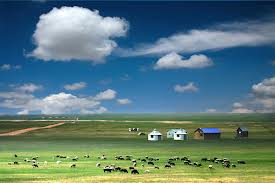
Hulunbuir Grassland is not only one of the largest three grasslands in the world, but also the best one. It is the cradleland of Mongolian and the main cattle-producing area in Inner Mongolia.
Hulunbuir Grassland enjoys the reputation
of the“Most
unsullied Grassland” because of the lack of pollution in this area. Besides, it
is known as the kingdom
of Pastureland and has
more than 1,000 species of plant.
On the grassland are green grass, beautiful
flowers, zigzag rivers, crystal-clear lakes, sheep and cows.

With a total area of 70,467 hectares,
Shennongjia Nature Reserve encompasses three vertical vegetation zones namely
subtropical, warm temperate and cold temperate.
The climate in Shennongjia is cool, moist
and rainy. Its average temperature is 7.9℃
with the extreme high temperature of 36.4℃
and lowest temperature of 17.7℃
below zero. July and August are rainy seasons.
Complicated terrain, plenty of rain, big
relative height difference and other reasons make the Shennongjia Nature
Reserve a mysterious place.
Shennongjia Nature Reserve is probably one
of very few virgin temperate forests remaining in the world. When touring, you
can understand that animals of every size can hide easily in such place.

Dunhuang Mogao Grottoes, also known as Thousand Buddha
Cave, is one of three noted grottoes
in China
and also inarguably the greatest treasure-trove of Buddhist art found in a
single locality anywhere in the world, comprises numerous temples and shrines
containing countless sculptures, murals and manuscripts.
Today, 492 caves still stand, containing
some 2,100 colored statues and 45,000 square meters of murals. Despite years of
erosion, the murals are still brightly colored, with clear lines. Through
pictures of different styles and schools drawn in different historical periods,
they tell Buddhist stories and ways as well as life in the secular world.

Qinghai Lake is not only the
largest salt water lake in China
but also the second largest in the world. From ancient times to the present,
whenever people mention Qinghai
Lake they think of “green
lake”, “blue lake” or “fairyland”, because of the marvelous natural beauty
reflected on it.
The water here is also very limpid, which
reflects the pretty green mountains in the deep like a mirror. The color
changes with time and varies in different depth of the lake, which produces a
sense of mystery.
If you are raring for a cool summer with
ease, come and join us.
Subscribe to:
Posts (Atom)