Showing posts with label Beijing Highlights. Show all posts

Sunday, September 1, 2013

Qing Court Fans in the Palace Museum Collection

The Palace MuseumThe Palace Museum houses near ten thousands ancient fans, most of which inherit from the Qing court collection. In this exhibition, over 120 fans and fan sets
are selected from those formerly collected by the Qing court and are classified and displayed with accessories. The aim is to shed light on the whole range of varieties, technical features and cultural connotations of fans used in the Qing court, and to provide visitors with a chance to appreciate and study them.

Thursday, August 29, 2013

Have a Tour Hangzhou in China Follow Me


Hangzhou, a city famous for its scenic splendor, attracts more than 20 million tourists from home and abroad every year. Its unique environment endowed by nature and those who have lived here, is an accumulation of several thousand years that has formed many world renowned natural, historical and cultural features.
Whenever talking about this city, the famous West Lake can never be far from one's thoughts. Held on three sides in the embrace of hilly peaks, this water wonderland has been an attraction for centuries and it is small wonder that it was a favorite imperial retreat. The lake and its environs have all the elements of a traditional Chinese garden but on a grand scale. The natural setting of strangely shaped peaks, serene forests and springs, dense foliage and a myriad of blossoms especially in springtime are enhanced by a treasury of sculpture and architectural features. The largest part of West Lake is known as the Outer Lake and it is bounded by the North Inner Lake, Yuehu Lake, West Inner Lake and Lesser South Lake.
The Solitary Hill lies between the Outer Lake and the North Inner Lake and is an ideal spot from which to admire the vista. For those who have a love of sculpture and art and those who have a particular interest in Buddhism the Peak Flown From Afar and the Temple of the Soul's Retreat are the must see attractions. The nearby Mausoleum of General Yue Fei is a monument to the patriot who was murdered in 1141 at the behest of his archrival Qin Hui, the Song prime minister. These buildings together with others in the vicinity of the lake such as the slender 13 storey high Six Harmonies Pagoda adds to the calm and beauty of their surroundings.
Gorgeous Cruise boats on West Lake
Temple of Soul's Retreat
This beautiful city is always ready to offer visitors more to see. If you have more time to travel in the city and want to see other places of wonderful landscape, you can visit the following scenic spots. Botanical Garden is both a park embracing beautiful plants and a research base to study botany. Running Tiger Spring is famed for its unique fountain of high water quality. Mt. Putuoshan Scenic Spot is held sacred by Buddhists and it was here that over the centuries a once large Buddhist community was to evolve. Red Carp Pond is the heart of Viewing Fish at Flower Harbor Park (Huagang Guanyu), one of the ten places of interests at West Lake. Thousand Islets Lake (Qian Dao Lake) is a pure lake with fresh and clean air. Twin Peaks Piercing the Clouds is a unique sight in foggy days.
No visitor to the West Lake and the city can fail to learn something of this city's most famous products, namely silk and Longjing (Dragon Well) Tea. China National Silk Museum is the country's first national museum to be dedicated to silk culture and is the largest of its kind in the world. A similar museum is dedicated in homage to tea. Located at the West Lake Dragon Well Tea Plantation, the National Tea Museum provides a fascinating insight into the history and production of tea. Additionally visitors can go to other museums. Museum of Traditional Chinese Medicine is the only state-level professional Chinese medicine museum in the country. Southern Song Dynasty Official Kiln Museum has been praised as the Civilized Museum of Zhejiang Province and the first group of provincial education base of patriotism.
Water Town
Qinghefang Ancient Street
Another natural spectacle to be found in the city is the Qiantang River Tide that has enthralled people for centuries. Annually, millions of people from both home and abroad flock there to watch the magnificent tide on the eighteenth day of the eighth lunar month (also around the mid-Autumn Day). When the surging tide comes, the water can rise up to a height of 30 feet and the noise it generates sounds like thunder, or thousands of galloping horses.
The other great feat of much earlier engineering is the Grand Canal. Linking the city in the south with Beijing in the north, this is the longest man-made waterway in China and surpasses both the Suez and Panama canals. Boating on the old Canal is one of the best ways to get a panoramic view of the landscape of typical river towns in southern region of the country, which include ancient dwellings, stone bridges of traditional designs and historical relics.
Six Harmonies Pagoda
The Heavenly King
The Statue of Yue Fei
Around the city area, there are also some places worth visiting. For example, Wuzhen, ranking first among the six ancient towns south of the Yangtze River was authorized as the Provincial Ancient Town of History and Culture. Xitang is a famous town with thousands of years of history. Mogan Mountain has been listed as one of the 'Four Best Summer Resorts in China' along with Beidaihe Scenic Spot, Mt. Lushan and Jigong Mountain. Tiantai Mountain Scenic Area is known for its beautiful scenery and for being the cradle of the Tiantai Sect of Chinese Buddhism.

Sunday, August 11, 2013

The Temple of the Reclining Buddha


The Temple of the Reclining Buddha, or Wofo Si, is situated at the foot of the Western Hills about 30 kilometers west of Beijing. It was first built in the 7th century at a cost of 5 million taels of silver. When it was renovated and expanded in the Yuan Dynasty, a huge statue of the reclining Buddha was cast. It was renamed the Temple of Eternal Peace during the Ming period. When it was restored under the Qing Dynasty, it was given another name: the Temple of
The Temple of the Reclining Buddha
Universal Awakening. It is generally referred to as the Temple of the Reclining Buddha.
The way leading to the temple is lined by towering ancient cypresses, with a glazed archway standing right in front of the temple. The archway is made of marble and crowned with glazed tiles of various shapes and colors.
In the centre of the first courtyard is a little pond with a stone bridge spanning it. The Bell Tower and the Drum Tower stand respectively on each side of the courtyard.
The buildings are symmetrically laid out. Five main halls stand one after another; each has side halls on both sides. The third hall is the Hall of the Reclining Buddha and contains a copper statue 5.2 meters in length in a reclining position with one arm straightened and the other turned to support the head. It was claimed that 250,000 kilograms of copper was used to cast the enormous statue. The statue was completed in 1321. Around the Reclining Buddha are twelve smaller statues. It is said that the posture of the group represents a scene in which Sakyamuni was giving instructions to his disciples under the bodhi tree while he was ill. To make the setting conform to the story, several bodhi trees were planted in the temple. They are believed to have come from India. The bodhi tree has long, narrow, dark-green leaves and its white flowers blossom in late spring and early summer and they resemble myriads of little white jade pagodas hanging upside down amidst the dark leaves. The buildings were renovated and redecorated after 1949.

Thursday, August 8, 2013

Chang'an Grand Theater


Built in 1937, Chang'an Grand Theater is located in Guanghua Changan Building, north on East Changan Street. As a modern theater with top quality, luxury and comfort, it perfectly embodies traditional styles, especially that of the Ming and Qing Dynasties and modern architectural art. Up to 800 people can be seated in this classic-oriented theater decorated with elegant red wood tables,
Chang'an Grand Theater
luxurious VIP boxes and comfortable chairs. Its highlights, the multi-functional stage, the advanced sound and light facilities are computer controlled, suitable for all kinds of performances.
There are various types of seats to choose: the tea house in the front area, the rowed seats in the back area, and the VIP box, common box and rowed seats on the second floor. Photos of Beijing Opera masters and theatrical costumes for different roles are exhibited on the second floor of the lobby. There is calligraphy, facial makeup, painting and video sold on the first floor. The highlight of Chang'an Grand Theater is the customized operas designed for the better understanding by foreign tourists. Collaborating with performance bodies like Beijing Opera Company, Chang'an Grand Theater offers "travel opera" for foreigners, which consists of maximum amount of roles in Beijing Opera and is easy to understand. The ingenuity of playwrights and directors, together with sophisticated settings, stage props, lights and sound, embodies the essential spirit of conventional Beijing Opera, best exemplified by The Legend of the White Snake, which made its debut in 1997 and is highly appreciated by foreign audiences. Synchronous subtitles in both Chinese and English are provided so that the audience may know the plot better. The daily show of travel opera in Chang'an Grand Theater has been an indispensable attraction in Beijing.

Monday, July 22, 2013

The History of the Great Wall's Construction

The history of the Great Wall's construction: The history of the Great Wall's construction can be traced back
to the 9th century B.C. during the Western Zhou Dynasty as a way to resist attacks from the nomadic people to the north. Many fortresses were built to resist the invasion. Around the 7th or 8th century B.C., in order to strive for supremacy and defense, the rulers from the Spring and Autumn period began building the Great Wall on their border lines based on their own defensive needs. The Great Wall of the State of Chu in the 7th century B.C. was the first wall built, and then the states of Qi, Han, Wei, Zhao, Yan, Qin and Zhongshan also began constructing walls in succession for self defense. At that time, the characteristics of the Great Wall were: the walls were different in the east, south, west and north, and their length ranged from hundreds of kilometers to around 2,000 kilometers. In order to distinguish these walls from those built by Qin Shi Huang, the historians called them "the Great Wall of the pre-Qin Dynasty" as a whole.
The History of the Great WallIn 221 B.C., Qin Shi Huang eliminated the six states, unified the whole of China, ended the chaos of war in the Spring and Autumn period, accomplished the great cause of national reunification, and established the first centralized feudal state in China. In order to ensure safe and stable production and to prevent invasions and harassment from the strong nomadic nationality to the north, the Qin Dynasty began constructing the Great Wall. In addition to using the original parts built by the states of Yan and Zhao in northern areas, the Great Wall was extended to Lintao County in the west and Liaodong in the east with a length of over 5,000 kilometers. Therefore, it was also praised as the "Wanli Great Wall," meaning it is very long.
After Qin Shi Huang, almost every emperor extended the Great Wall during their reign in central China, including the Han, Jin, Northern Wei, Eastern Wei, Western Wei, Northern Qi, Northern Zhou, Sui, Tang, Song, Liao, Jin, Yuan, Ming and Qing dynasties. Among them, the Han, Jin and Ming dynasties had the largest construction scale, and the walls built during the three dynasties were all 5,000 to 10,000 kilometers in length and had different locations. As for the nationalities that once took part in the construction of the Great Wall, many minorities also renovated and extended the Great Wall during their reign in addition to the Han nationality. More parts of the Great Wall were built during the reign of minority nationalities than the Han nationality. During the Kangxi Emperor period in the Qing Dynasty, although the large-scale construction of the Great Wall was stopped, some similar walls were indeed built in a few places. It can be said that during the more than 2,000 years of history from the Spring and Autumn period to the Qing Dynasty, the construction of the Great Wall had never been truly stopped.

Wednesday, June 12, 2013

One Day Place to Visit in Beijing


Beijing, as a modern metropolis of historic values, is heading towards a grand goal of building a world city with Chinese characteristics and building an international center for business and trade. What place to visit in Beijing , you should pay a visit to those ancient attractions. Here one day Beijing travel to Tiananmen Square, Forbidden City, Temple of Heaven and Summer Palace, the most famous spots in Beijing also offer a great chance to make friends during the short journey.

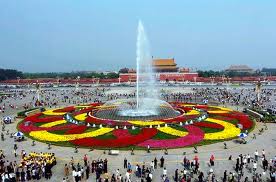
Tiananmen Square


With a total area of 440,000 square meters, Tiananmen Square is the largest public square in the world and it can hold one million persons. For hundreds of years, Tiananmen Square has witness many important events happen here, just like a mirror of Chinese history.

Forbidden City


Needless to say, Forbidden City is the largest wooden cluster in existence in the world today. Emperors of Ming and Qing Dynasties ruled this country from here over a span of nearly 500 years. While entering this magnificent, solemn and palatial complex, tourists would be amazed with its incredible majestic architecture.

Temple of Heaven
 
Now, Temple of Heaven is the largest existing complex of ancient sacrificial buildings in China. 

Summer Palace


With a long history, Summer Palace is the largest and most well-preserved royal park in China. Once, Summer Palace was invaded by Anglo-French troops who burnt the “Three Hills and Five Gardens” and plundered the places of their treasures. 

Itinerary of One Day Beijing Tour

1. Get to Tiananmen Square, taking pictures around the square as you like. Then visit the landmark of Beijing - Forbidden City.
2. Move on to another historical site, the Temple of Heaven. On the way, you will have a chance to visit the Chinese traditional medicine culture.
3. Enjoy a short visit to a pearl free market after lunch. Then move on to the Summer Palace to enjoy the largest and most beautiful Chinese imperial garden for about 1.5 hours.
4. After the whole day tour, transfer you back to your hotels.

Price including:
1. Pick-up and drop-off from your hotel on tour days;
2. Entrance tickets of the sightseeing.
3. Excellent English-speaking tour guide.
4. Air-conditioned car or van with driver.
5. A typical Chinese lunch.

Price excluding:
Tips to the guide and driver.

Payment Method: Cash, Credit Cards, Wire, Western Union

We wish you will have a cheerful one day Beijing travel, with sincere heart.

Thursday, June 6, 2013

Top Place to Visit in Beijing , Show You .


Beijing is an old city with many grand buildings that present thousands of years of Chinese history. Do you know top place to visit in Beijing , let me show you. 

Tiananmen Square

Tiananmen Square resembles historical eyewitness, also resemble one side mirror, we could get much history from this historical site, with many important events has happened here. Beyond question, Tiananmen Square is not only the heart of Beijing but also the symbol of China.

Forbidden City

We are proud to say that Forbidden City is the best preserved imperial place in China and the largest ancient palatial structure in the world.
Forbidden City, so called because at one time only members of the imperial court were allowed inside. And it was the place where emperors of the Ming and Qing Dynasties handled court business and resided.
Benches lining the walls outside the Forbidden City provide a moment’s rest for tourists visiting the ancient imperial palace in Beijing.

Badaling Great Wall

Chairman Mao had been said” He who has not been to Great Wall is not a true man”. Nearly every tourist from home and abroad will hike at Badaling Great Wall during their Beijing tour.
Just listen to me is not enough, you should better pay a visit to view this most famous and best preserved section of Great Wall-Badaling.

Itinerary of One Day Beijing tour

1. Pick you up and directly drive to Tiananmen Square for sightseeing about 40 minutes. And then transfer to Forbidden City where you have 2 hours for touring.
2. After lunch, your tour guide will take you to visit Badaling Great Wall.
3. On the way back to your Beijing hotel, tourists have a chance to visit Chinese traditional medicine culture. 

How to Book Tours from Our Website?

Just fill in the online reservation. If you have any questions, you could email or call us.

Price including

1. Pick-up and drop off service from your hotel;
2. Air-conditioned vehicle van with driver;
3. Entrance tickets of sightseeing;
4. English speaking tour guide explain the sightseeing about the tour;
5. A typical Chinese lunch.

Price excluding

1. Fee of cable car;
2. Tips to the guide and driver.

Payment Methods

Either by cash to tour guide (CNY/ USD), Credit Card through PayPal, Western Union Money Transfer or Bank Remit (Wire Transfer).

Place to Visit the Highlights in Beijing and This Trip will Give you a deep impression.